 Dada Aleksic
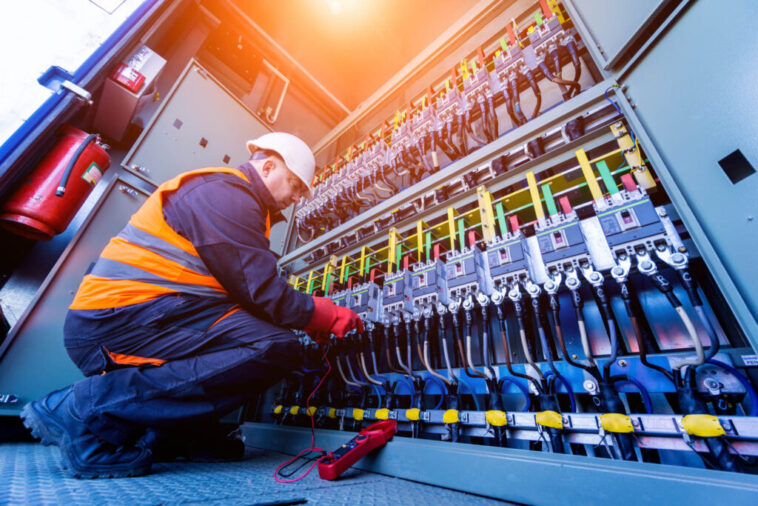
Electrical work carries real risk, and the gear an electrician wears or carries on any given job reflects that. But safety equipment only tells half the story. The other half is what electricians are actually doing once they’re properly geared up, and for residential electricians, a surprising amount of that work centers around a fairly predictable set of fixture installations that homeowners call for again and again.
Why Safety Gear Comes First, Every Time
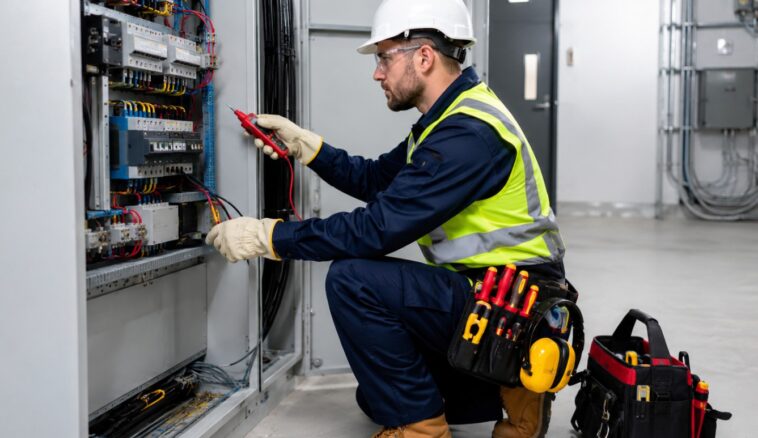
Before getting into the work itself, it’s worth understanding why proper safety gear isn’t optional on any electrical job, residential or commercial. Working with live circuits, exposed wiring, or even de-energized systems that haven’t been fully verified carries consequences that range from minor shocks to serious injury. Professional electricians treat safety gear as non-negotiable infrastructure, not an afterthought.
The essentials include insulated gloves rated for the voltage being worked with, safety glasses to protect against sparks and debris, and non-conductive footwear designed to prevent grounding through the body. Voltage testers and multimeters round out the kit, allowing an electrician to confirm a circuit is actually de-energized before touching it, rather than relying on assumption.
The Jobs That Fill an Electrician’s Schedule
With safety covered, the actual work an electrician performs in residential settings tends to cluster around a fairly consistent set of tasks. Understanding what these jobs typically involve helps homeowners know what to expect when they call one in, and why certain jobs take longer or cost more than others.
Panel Upgrades and Circuit Work
Older homes frequently need electrical panel upgrades to safely support modern power demands, everything from home offices with multiple devices to EV chargers and updated HVAC systems. This is some of the highest-stakes work an electrician performs, since it involves the entire home’s electrical distribution rather than a single fixture or outlet.
Outlet and Switch Installation
Adding outlets, replacing outdated switches, or installing GFCI outlets in kitchens and bathrooms makes up a steady stream of residential calls. These jobs are relatively contained compared to panel work, but still require the same attention to proper wiring and code compliance.
Lighting Fixture Installation
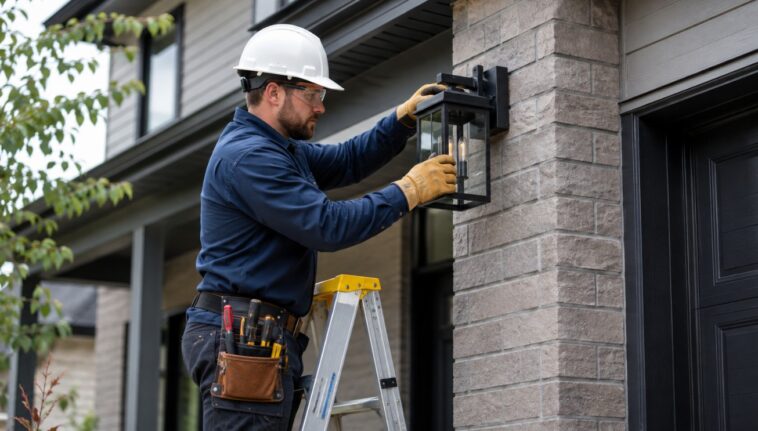
Lighting jobs are among the most requested residential electrical services, and for good reason. Homeowners frequently want to modernize a room, and swapping out an old overhead fixture or adding new lighting where none existed before is one of the most visible upgrades available.
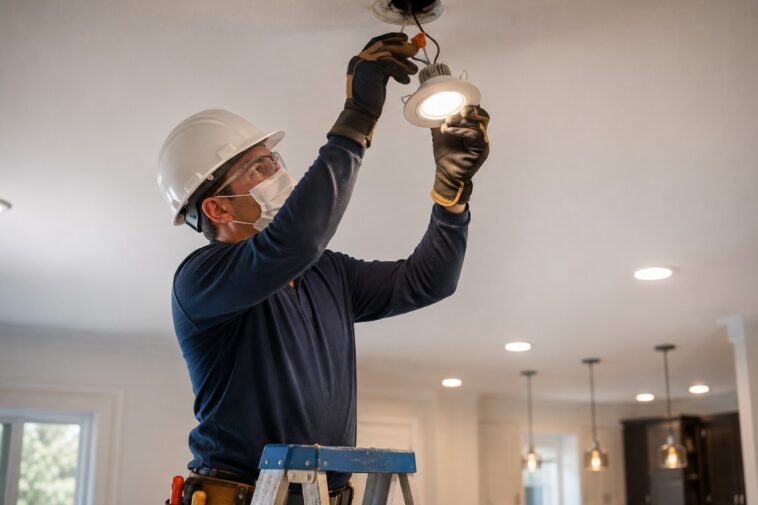
Recessed lighting is a particularly common request. Homeowners looking to update a kitchen, living room, or hallway often ask about recessed ceiling lights specifically, since they offer clean, even lighting without the visual bulk of a traditional fixture hanging from the ceiling. Installing these properly involves cutting into the ceiling, running wiring through often tight or inaccessible spaces, and ensuring proper spacing for even light distribution, which is exactly the kind of job that benefits from a licensed electrician rather than a DIY attempt.
A few other lighting-related jobs that come up regularly:
- Installing dimmer switches to give homeowners more control over ambiance and energy use
- Adding under-cabinet lighting in kitchens for better task visibility
- Replacing outdated fluorescent fixtures with modern LED alternatives
Why These Jobs Require the Same Level of Caution
It’s tempting to assume that lighting installations are lower-risk than panel work simply because they’re smaller in scope. In practice, any job that involves working near live wiring, cutting into walls or ceilings where wiring may already exist, or connecting new fixtures to existing circuits carries genuine risk if not approached carefully.
This is exactly why the safety gear discussed earlier isn’t reserved for the bigger, more obviously dangerous jobs. An electrician installing a single recessed light fixture in a ceiling still needs to verify the circuit, wear appropriate protective gear, and follow the same careful process used on larger projects. Skipping precautions because a job seems small is one of the more common ways minor electrical work turns into a serious incident.
What This Means for Homeowners
For homeowners planning an electrical project, whether it’s a full panel upgrade or a simple fixture swap, understanding both sides of the equation, the safety measures an electrician follows and the specific work being performed, helps set realistic expectations. A quote that accounts for proper safety protocols and code-compliant installation will typically look different from a quick, informal estimate that skips those considerations.
The bottom line is that professional electrical work, regardless of scale, involves consistent standards. Good safety gear and careful process aren’t reserved for the complicated jobs. They’re the baseline for every job, from a full panel replacement down to a single new light fixture in a hallway ceiling.